
The short answer: No. Outside narrow uses like preventing mouth sores during cancer treatment, traditional health insurance doesn't cover red light therapy.
Most insurance companies classify red light therapy as experimental or cosmetic, which means you'll pay out of pocket. But that doesn't mean you're completely on your own. There are workarounds, and a wellness membership like Gabriel Care, which works alongside your insurance, does cover it.
Let's break down what you need to know about paying for red light therapy.
What Is Red Light Therapy and Why Do People Use It?
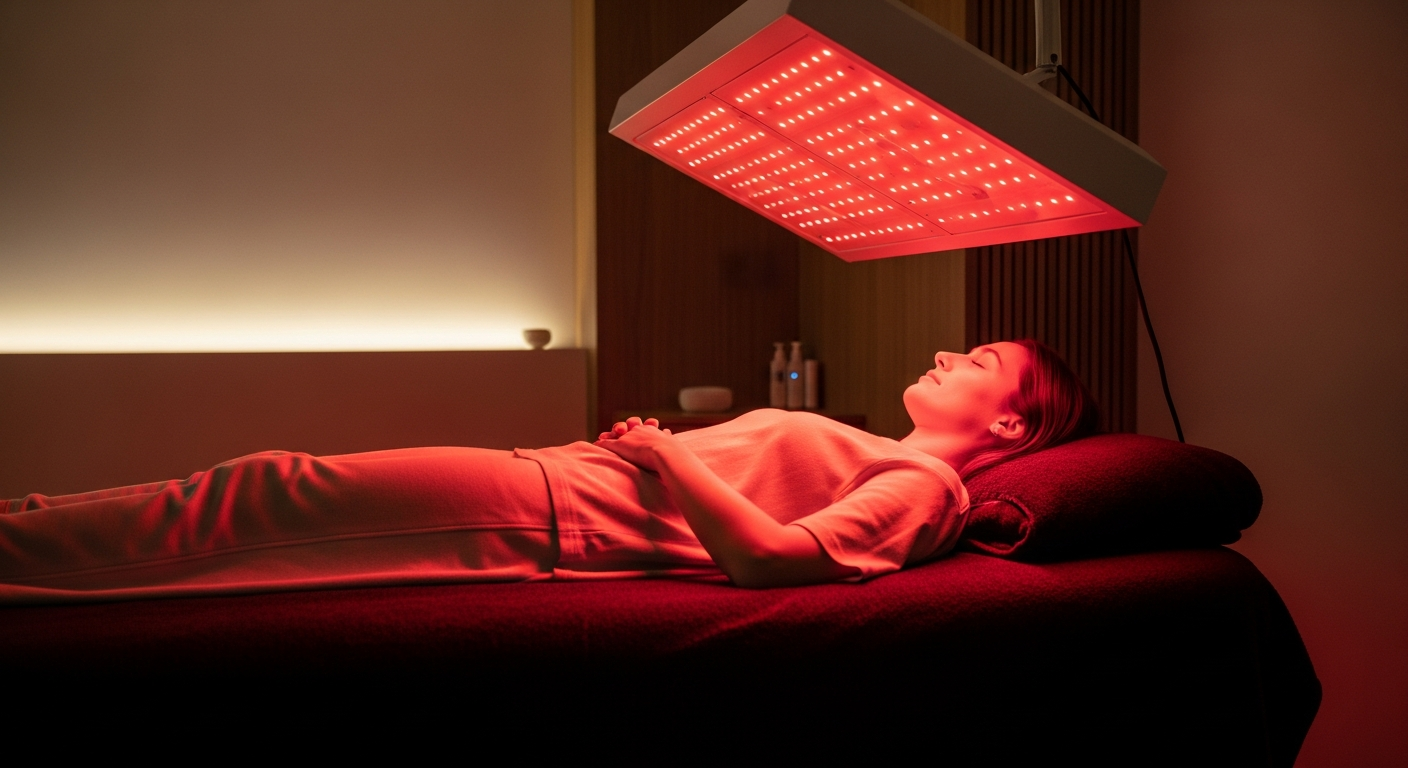
Red light therapy (also called photobiomodulation) uses specific wavelengths of red and near-infrared light to penetrate your skin and trigger cellular responses. The light doesn't feel hot, it doesn't burn, and sessions typically last 10-20 minutes.
People use red light therapy for a surprising range of health issues:
Pain management. Chronic joint pain, arthritis, back pain, and muscle soreness all respond to red light therapy according to clinical research. The light reduces inflammation at the cellular level.
Skin health. Dermatologists have used light therapy for decades. Red light stimulates collagen production, which can improve skin texture, reduce wrinkles, and help with acne scarring.
Recovery and performance. Athletes use red light therapy to speed up muscle recovery after intense training. Some studies show it can reduce delayed onset muscle soreness (DOMS).
Inflammation reduction. Red light therapy appears to reduce inflammatory markers in the body, which is why it helps with conditions from tendonitis to inflammatory skin conditions.
Wound healing. Research shows red light therapy accelerates wound healing by improving circulation and cellular repair processes.
The science behind red light therapy involves mitochondria (your cells' energy factories). The specific wavelengths of light boost ATP production, which gives your cells more energy to repair and regenerate.
Why Insurance Companies Call It "Experimental"
Here's the frustrating part: there are over 6,000 published studies on red light therapy. NASA researched it for wound healing in space. The FDA has cleared red light devices for pain relief and skin conditions.
But insurance companies still won't cover it.
Why? Because insurance coverage requires large-scale randomized controlled trials that establish "standard of care" protocols. Red light therapy has plenty of research showing benefits, but the studies vary widely in protocols (wavelength, power density, treatment duration, frequency).
Insurance companies want to see:
- Standardized treatment protocols across the medical community
- Long-term outcome data comparing red light therapy to established treatments
- Clear diagnostic criteria for who should receive treatment
- Peer-reviewed guidelines from major medical organizations
Until these boxes are checked, insurers classify red light therapy as investigational or experimental. This puts it in the same category as many cutting-edge treatments that work but haven't navigated the insurance approval process.
The other issue: many effective red light therapy uses fall into wellness and prevention rather than acute treatment. Insurance companies focus on treating diagnosed conditions, not preventing them or optimizing health.
What Does Red Light Therapy Actually Cost?
If insurance won't cover it, what will you pay?
Clinical sessions: $50-150 per session at a med spa, wellness clinic, or chiropractor's office. Most protocols recommend 2-3 sessions per week initially, then maintenance sessions.
That works out to $200-500 per month for regular treatment. Some clinics offer package deals that bring the per-session cost down.
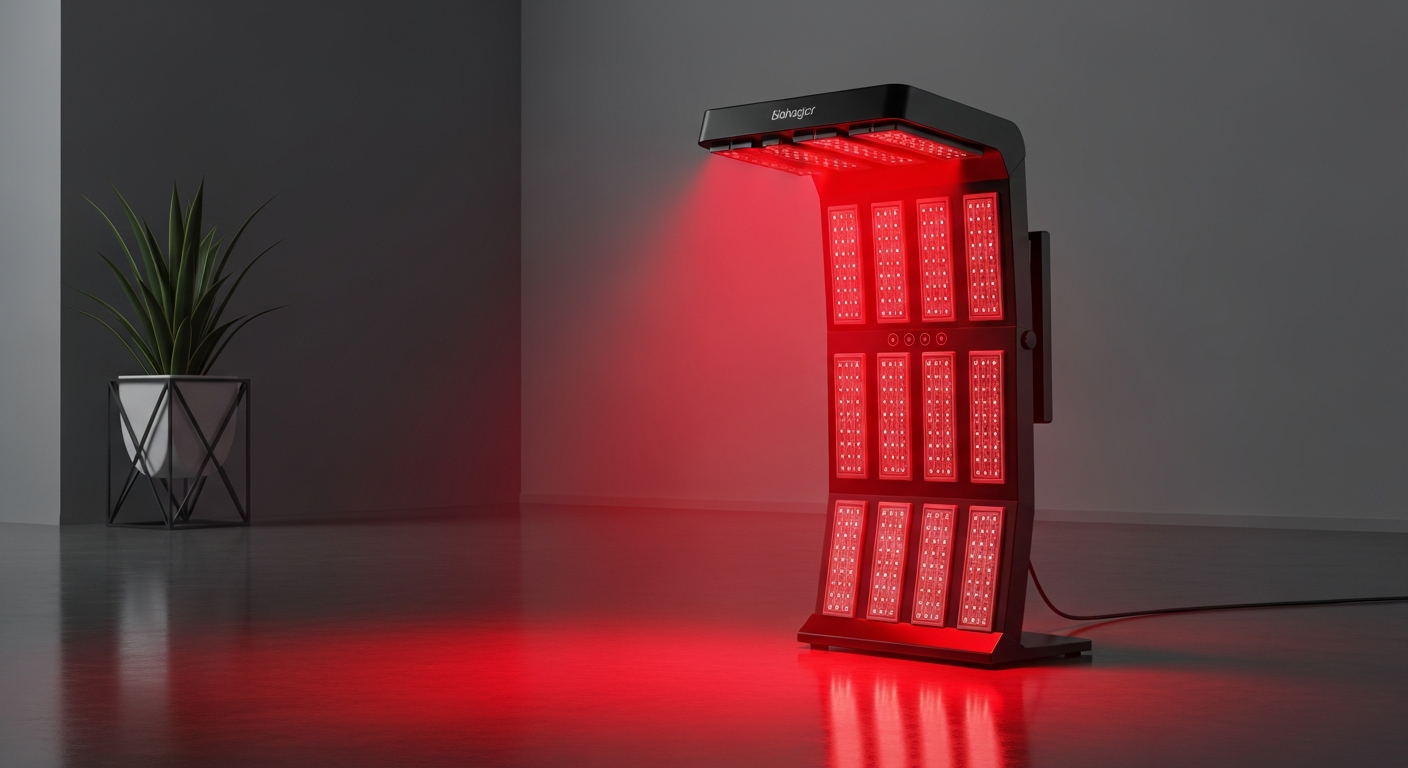
Home devices: $500-2,000 for a quality red light therapy panel you can use at home. Handheld devices for targeted treatment run $150-400.
Home devices have a higher upfront cost but pay for themselves if you'd otherwise do clinical sessions for 2-6 months. The trade-off is that you need to be consistent and follow proper protocols yourself.
Maintenance costs: Home devices use minimal electricity (about the same as running a laptop). Quality devices last 5-10 years before the LEDs degrade significantly. No consumables or ongoing costs beyond electricity.
Your Options for Covering Red Light Therapy
Even though traditional insurance doesn't cover red light therapy, you have several ways to offset the cost.
HSA and FSA Accounts (Maybe)
Health Savings Accounts (HSAs) and Flexible Spending Accounts (FSAs) might cover red light therapy, but there's a catch.
You need a Letter of Medical Necessity (LMN) from your doctor stating that red light therapy treats a specific diagnosed condition. Generic wellness doesn't qualify. But if your doctor prescribes red light therapy for a diagnosed condition like chronic pain, arthritis, or a skin condition, your HSA/FSA administrator may approve it.
The process:
- Get your doctor to write a detailed letter explaining your diagnosis and why red light therapy is medically necessary
- Submit the letter to your HSA/FSA administrator for pre-approval
- Keep all receipts and documentation
Success varies by administrator. Some approve it readily, others deny it. Worth trying if you already have an HSA or FSA.
Home Devices (Upfront Investment)
Buying your own red light therapy panel is the most cost-effective option if you'll use it regularly. You control your schedule, you can treat multiple family members, and you're not locked into clinic appointments.
Look for devices that:
- Use 660nm (red) and 850nm (near-infrared) wavelengths
- Have adequate power density (at least 100 mW/cm² at 6 inches)
- Come from reputable manufacturers with third-party testing
- Include reasonable warranties (at least 1-2 years)
A quality full-body panel costs $800-1,500. Smaller panels for targeted treatment run $300-600.
A Wellness Membership (The Gabriel Care Option)
This is where a wellness membership offers something traditional insurance doesn't: coverage for the wellness and preventive treatments that keep you healthy.
Gabriel Care is a wellness membership that works alongside your health insurance. Your plan handles conventional medical care, and Gabriel Care covers the care insurance won't, including treatments that prevent problems and optimize health.
How Gabriel Care Covers Red Light Therapy
Gabriel Care includes red light therapy under its wellness benefit. There's no separate cap for it: sessions draw on your monthly wellness balance, up to $500 a month on Emerald, $750 on Sapphire, and $1,500 on Onyx.
Here's what that means in practice:
Monthly membership: from $249 a month. No deductibles.
Reimbursement: 100% with Gabriel Network providers and 50% out of network, up to your balance for the month. The same balance covers red light therapy, IV therapy, massage, chiropractic care, acupuncture and other preventive services.
Simple approvals. A single session doesn't need approval first: see a licensed provider, then submit your receipt. For a recurring protocol, like two or three sessions a week, or any single expense of $300 or more, get pre-approval before you book.
Home devices: Clinic sessions are covered. Home wellness devices are generally excluded unless your Benefits Schedule expressly includes them, so check with Gabriel before you buy a panel.
Your schedule, your balance. Three clinic sessions a week or one a month: once a recurring protocol is pre-approved, you decide how to use your monthly balance.
Gabriel Care was built for people who want healthcare that supports them staying healthy, not just treatment when things go wrong. Red light therapy fits perfectly into that model because it's backed by real research and helps with everything from pain to recovery to inflammation.
The math works out especially well if you're already spending money on wellness treatments. Emerald starts at $249 a month with up to $500 a month in wellness balance. If you're doing red light therapy, getting regular massages, or seeing a chiropractor, Gabriel Care can save you money while giving you more flexibility than insurance would.
Frequently Asked Questions
Does Medicare cover red light therapy?
No. Medicare has a national non-coverage decision for infrared light therapy devices (NCD 270.6) used for neuropathy, wounds and related pain, and Part B doesn't cover red light therapy for other pain or for general wellness. Medicare Advantage plans typically exclude it as well.
Can I get red light therapy covered if I have a prescription?
A prescription helps if you're trying to use HSA/FSA funds, but it won't change whether insurance covers red light therapy. Insurance companies make coverage decisions based on medical policy, not individual prescriptions. However, a prescription is essential if you want to try getting HSA/FSA reimbursement.
Are there any insurance companies that cover red light therapy?
Only for narrow medical uses. Several major insurers, including Aetna and Cigna, cover low-level laser therapy (a form of photobiomodulation) to prevent mouth sores (oral mucositis) during chemotherapy, radiation or a stem cell transplant. For pain, skin, recovery and general wellness, no major U.S. insurer covers it as a standard benefit. Your best bet is a wellness membership like Gabriel Care, alongside your insurance, or HSA/FSA funds with proper documentation.
Is red light therapy worth paying for out of pocket?
That depends on what you're treating and your budget. If you have chronic pain, ongoing inflammation, or skin issues that haven't responded well to other treatments, red light therapy has solid research backing it. Many people find significant relief. The key is being consistent. If you can afford clinical sessions or a home device and commit to regular use, it's often worth the investment. Trial sessions at a local clinic can help you decide before committing to a home device.
What's the difference between red light therapy at a clinic vs. at home?
Clinical red light therapy typically uses larger, more powerful panels that can treat your whole body at once. Clinics may also combine red light therapy with other treatments. Home devices require more discipline (you have to actually use them), but give you unlimited sessions once you've purchased the device. The light wavelengths and biological effects are the same, as long as you buy a quality home device with adequate power output. Home devices pay for themselves after 3-6 months compared to clinic pricing.
The Bottom Line
Traditional health insurance doesn't cover red light therapy for most uses because insurers classify it as experimental, despite thousands of studies supporting its use. You'll pay out of pocket for clinical sessions ($50-150 each) or buy a home device ($500-2,000).
Your best options are:
- Use HSA/FSA funds with a Letter of Medical Necessity from your doctor
- Invest in a quality home device for long-term use
- Join a wellness membership like Gabriel Care that covers red light therapy alongside your insurance
Gabriel Care makes the most sense if you're committed to regular red light therapy or other wellness treatments. Memberships start at $249 a month, with up to $500 a month in wellness balance on Emerald ($750 on Sapphire, $1,500 on Onyx) and the flexibility to use it however works best for you.
The gap between what insurance covers and what actually keeps people healthy is real. Red light therapy falls squarely in that gap. Until insurance companies catch up with the research, you'll need to find alternative ways to pay for treatments that work.
See everything Gabriel Care covers at gabrielcare.co/coverage-list
Last updated: September 2026